Becoming a manager changes your job overnight. You go from doing the work to getting it done through other people, usually with no training and a team that's watching what you do first. This is a plain three-month plan: learn in the first 30 days, build trust by day 60, and lead by day 90. It has checklists, questions and wording you can copy.
Most new managers try to prove themselves by changing things fast. The ones who do well do the opposite: they listen first, fix one small thing people asked for, and only then start setting direction. A simple way to plan it:
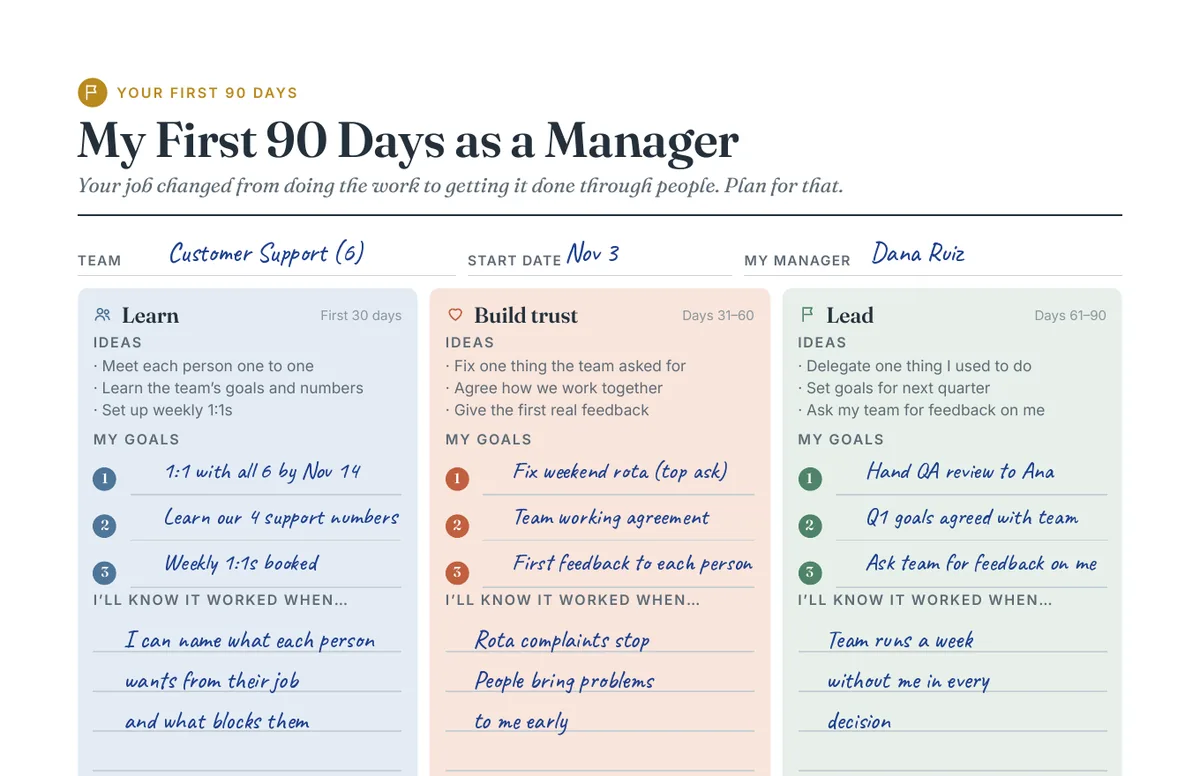
Days 1 to 30, learn: meet each person one to one, learn the team's goals and numbers, set up weekly 1:1s.
Days 31 to 60, build trust: fix one thing the team asked for, agree how you'll work together, give the first real feedback.
Days 61 to 90, lead: delegate one thing you used to do, set goals for next quarter, ask your team for feedback on you.
A new support manager's first 90 days on one page, from the 1:1 & Team Pack in the New Manager Toolkit.
What should a new manager do in the first week?
Keep the first week small and visible. A checklist that works for most teams:
Send a short hello to the team: who you are, that you'll meet each of them this week or next, and that nothing changes yet.
Book a first 1:1 with every person in the first two weeks, 30 to 45 minutes each.
Book your first conversation with your own manager about what success looks like.
Sit in on every regular team meeting without changing any of them.
Find the team's numbers: the dashboard, report or targets people are judged on.
Read the last few months of team updates, project docs and any open complaints.
Start one list for every promise you make, with a date next to each.
Write down your first impressions, then put them away for a month. Some will be wrong.
What to say in your first team meeting: vague vs clear
Instead of "I've got lots of ideas", say "For the next month I'm mostly going to listen and ask questions."
Instead of "My door is always open", say "I'll have a 1:1 with each of you every week, starting this week."
Instead of "Nothing's going to change", say "Nothing changes for now. If I want to change something, you'll hear why first."
Instead of "Let me know if you need anything", say "Tell me the one thing that slows you down most. I'll pick one and fix it this month."
Instead of "I'm still one of the team", say "My job has changed, and I want to be fair to everyone. Tell me if I get that wrong."
What questions should you ask in your first one-on-ones?
Make the first 1:1 about them, not the backlog. Pick five or six of these and write the answers down. By the fifth conversation, patterns appear: the same blocker, the same frustration, the same idea.
What are you working on right now, and what are you proud of?
What gets in the way of doing your best work?
What did your last manager do that helped? What didn't?
How do you like to get feedback: in the moment, or saved for our 1:1?
How do you like to be recognized: in public, in private, or in writing?
What's one thing the team should stop doing?
What would you change first if you were me?
Where do you want to be in a year or two?
What part of your job would you like more of, and less of?
Is there anything you're worried about with the change of manager?
What should I know that nobody will tell me?
What's the best way for me to help you this month?
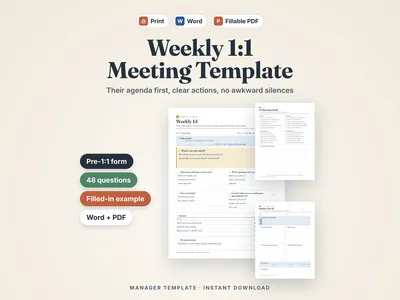
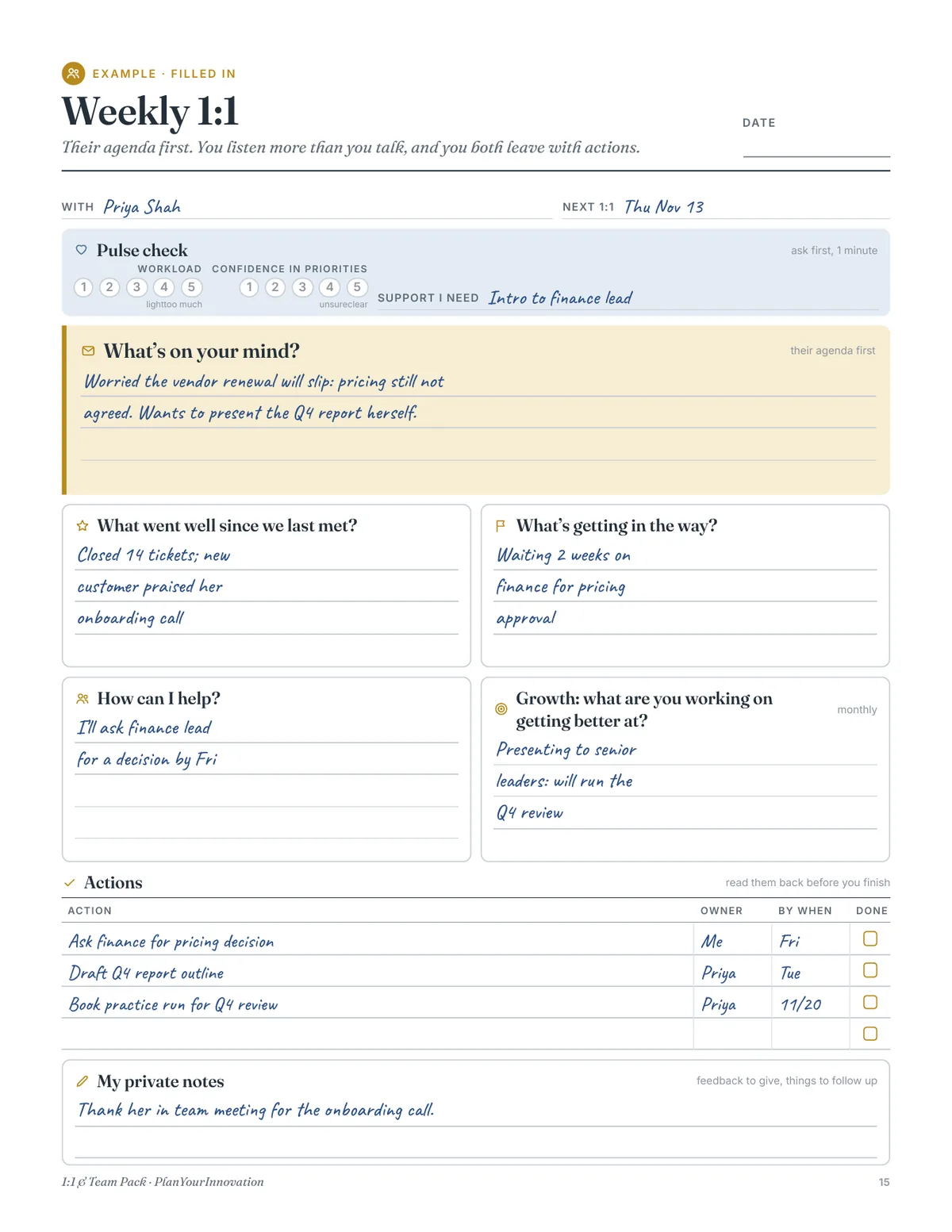
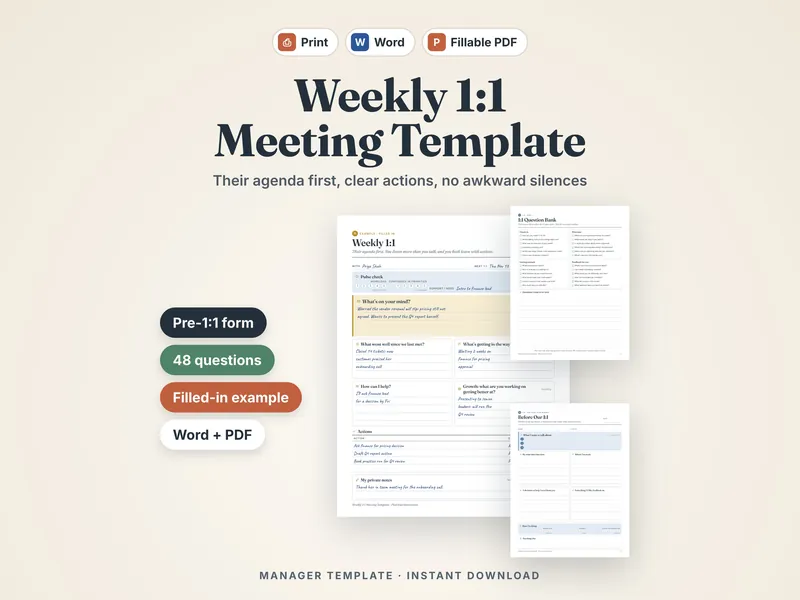
After the first round, switch to a weekly 1:1 with a simple shape: their topics first, then yours, then actions with an owner and a date. Our one-on-one meeting questions guide has the full agenda and 55 questions for managers and employees.
A filled-in weekly 1:1: their agenda first, then actions with an owner and a date.
Five conversations to have with your own boss
Have each of these in your first month, and write down what they say in their words. They'll save you from guessing what "good" looks like.
The situation: how do you see the team today? What's working, what isn't, what's urgent?
Expectations: what does success look like at 90 days and at a year? How will I be measured?
Working style: how do you like updates? How often should we meet? What can I decide on my own?
Resources: what budget, people, tools and access do I have? What could I ask for?
My growth: what should I learn first, and from whom? How will you give me feedback?
From day one: keep every promise
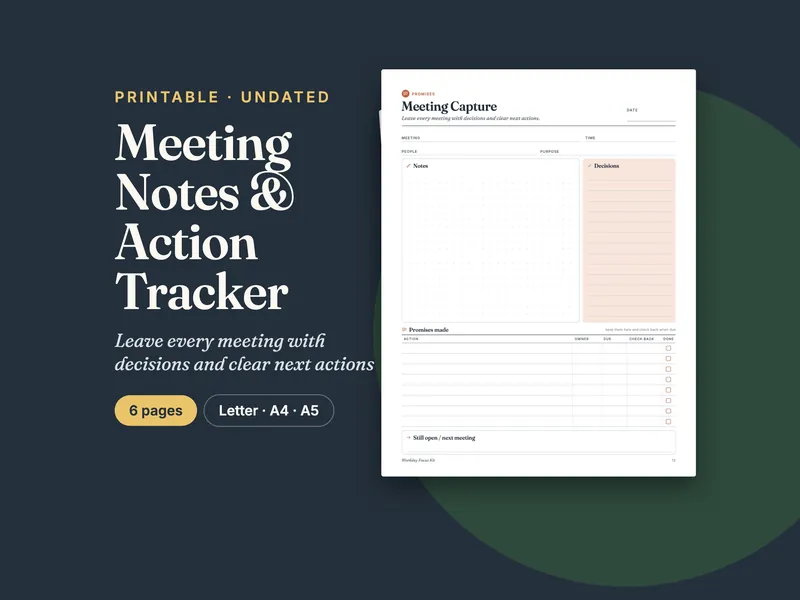
The quickest way to lose trust as a new manager is to forget something you said you'd do. In every 1:1 and meeting, write each promise down with an owner, a due date and a day to check back, and keep them all in one place, not in five notebooks. Start each 1:1 by reading last week's actions out loud. A month of small kept promises does more for trust than any team offsite.
Days 31 to 60: build trust
By now you know what the team keeps asking for. Pick one thing, ideally small and visible, and fix it: a broken rota, a pointless meeting, a slow approval, missing equipment. Tell the team you heard them and what you did.
This is also the time to agree how you'll work together. A one-page team working agreement covers it: how you communicate, how decisions get made, when meetings happen, how fast people reply, and what happens when something goes wrong. Write it together in one meeting and review it every quarter.
How to give your first feedback: vague vs specific
Start giving small, specific feedback every week, positive and constructive. Specific beats kind-but-vague every time:
Instead of "Great job on the presentation", say "Opening with the customer quote made the room listen. Do that again at the board review."
Instead of "You need to communicate more", say "I found out about the delay from the client. Next time, tell me the day you see the risk."
Instead of "Thanks for your help", say "Covering the queue on Friday meant no customer waited over the weekend. Thank you."
Instead of "Be more proactive", say "When you spot a problem, bring one suggested fix with it, even a rough one."
Instead of "Your reports need work", say "The numbers are right. Put the one-line summary at the top so leaders read it."
Days 61 to 90: lead
Now start leading, not just running. Three things matter most in the third month:
Set two or three team goals for next quarter, each with a number you can track, and review progress every week in a few minutes.
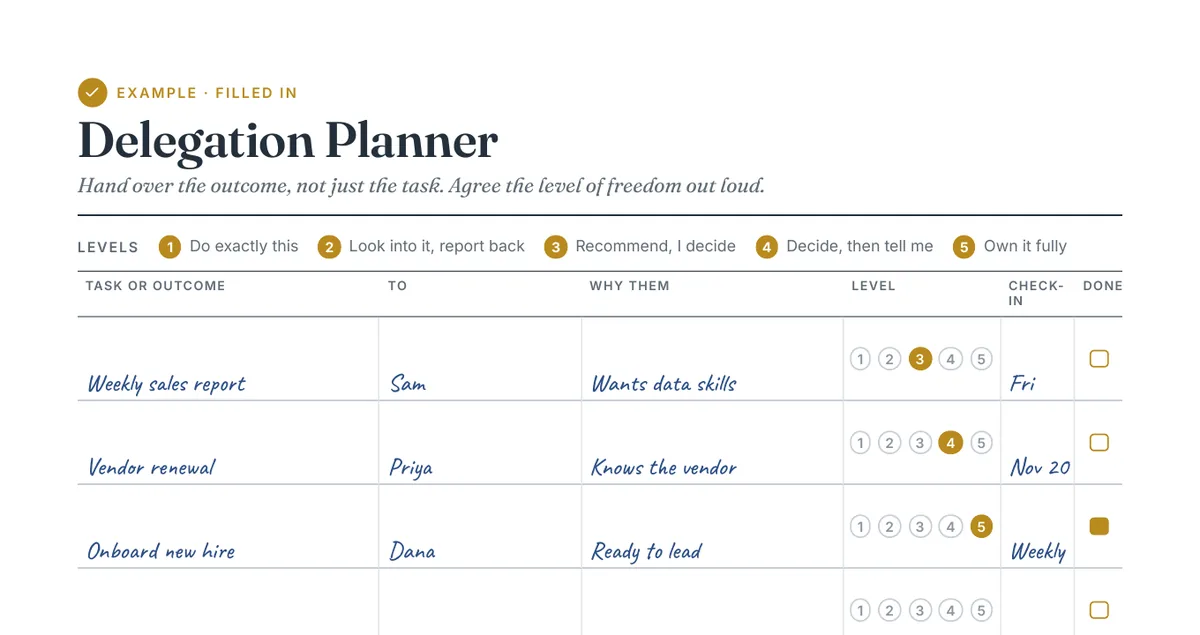
Delegate at least one thing you used to do yourself. Hand over the outcome, not just the task, and agree out loud how much freedom they have.
Ask your team for feedback on you: "What should I keep doing, start doing and stop doing?" Then act on one answer.
Delegation examples
"Sam, I'd like you to own the weekly sales report from now on. Look into it and recommend what you'd change; I'll decide this first time."
"Priya, the vendor renewal is yours. Make the call, then tell me what you decided by the 20th."
"Dana, you're ready to lead onboarding for the new hire. Own it fully; let's check in weekly."
"Ana, can you take over QA on ticket batches? Shadow me twice, then it's yours."
Three hand-overs, each with an agreed level of freedom, from 'look into it' to 'own it fully'.
Start an evidence log for each person
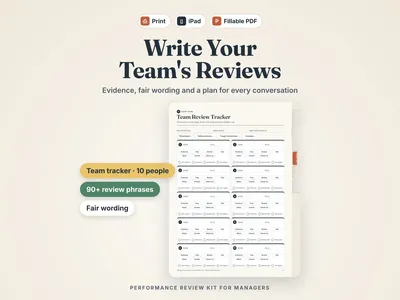
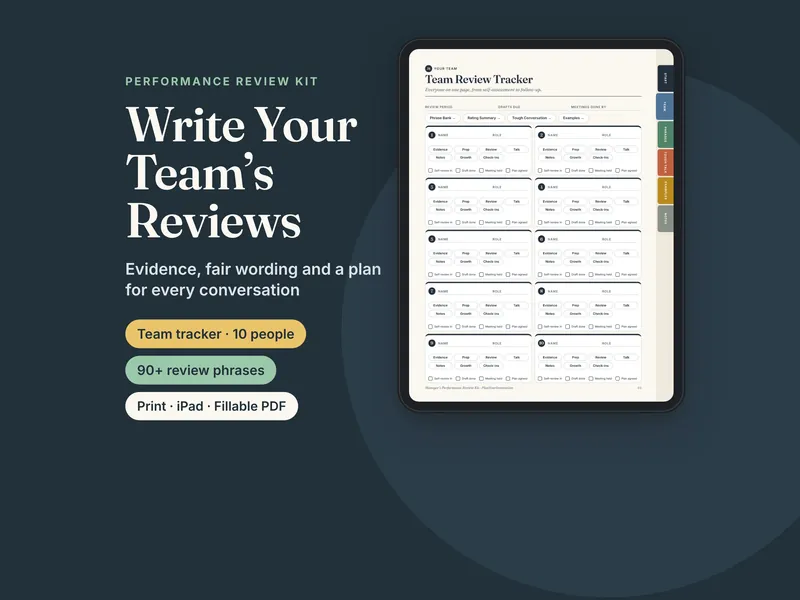
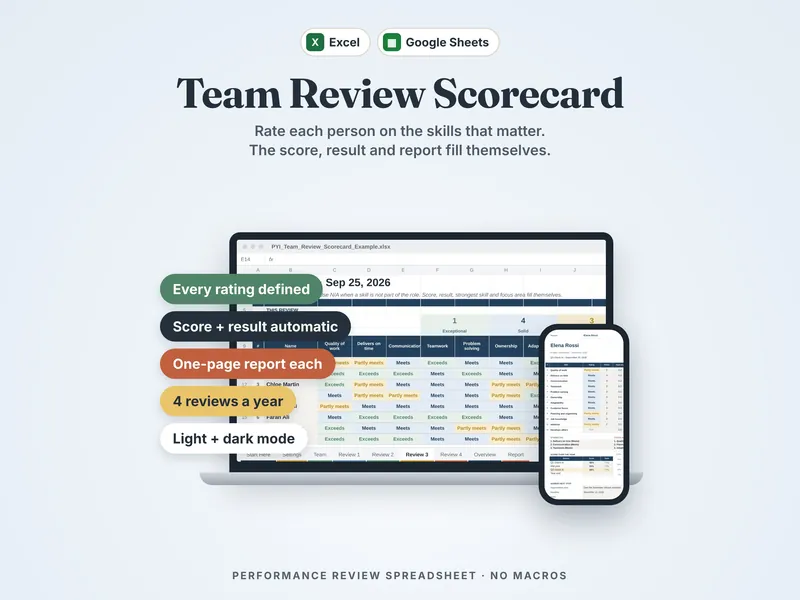
In month three, open a simple log for each person: one dated line whenever they do something worth remembering, good or bad. When review season comes, you'll have a year of notes instead of a blank form, and your reviews will be fairer. Our guides on how to write a performance review and how to write a brag document show what to do with them. It works for you too: here's my free brag doc for your own wins.
How do you manage people who used to be your peers?
Say it out loud in your first 1:1: the relationship is changing, you value it, and you want to be fair to everyone. Then be consistent, especially about who gets which work and who gets feedback. Don't overcorrect by becoming distant, and don't share team gossip any more. If someone else wanted the job, acknowledge it privately and ask what they'd like to work on next.
Three things change the day you're promoted over friends. Information: you'll know about pay, plans and problems you can't share, so stop trading inside news. Fairness: your old lunch group is now watching who gets the good projects, so decide work by skill and growth, and say why. Feedback: you now owe your friends honest feedback, so start small and private in the weekly 1:1, where it's normal. The friendship can stay. The inside jokes about the boss can't, because now you're the boss.
Instead of "Don't worry, nothing's changed between us", say "Our friendship matters to me, and my job has changed. I'll be fair to you the same way I'm fair to everyone."
Instead of "Can you just do me a favor and take this one?", say "I'm giving you this project because you know the customer best. Here's what done looks like."
Instead of "Ugh, I know, management is making us do this", say "This is the decision, here's why it was made, and here's what I can still change."
Instead of saying nothing about the missed deadline because it's awkward, say "The report was late twice this month. What got in the way, and what would help?"
Instead of "I know you wanted this job too, sorry", say "I know you went for this role. I'd like to help you get the experience for the next one. What would you want to lead?"
What mistakes do new managers make?
Changing processes in week one, before they know why those processes exist.
Doing the work themselves because it's faster. It is, for about a month.
Canceling 1:1s when they're busy, which is exactly when people need them.
Putting off a hard conversation until it becomes a review problem.
Trying to be everyone's friend instead of fair and consistent.
Saying yes to every request from above without checking the team's capacity.
Forgetting their own development: nobody else is planning it.
Templates that help
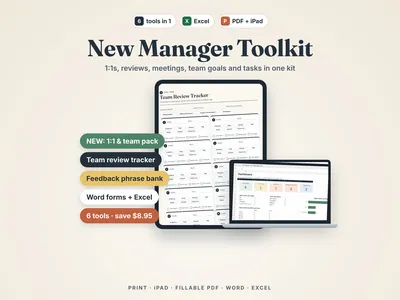
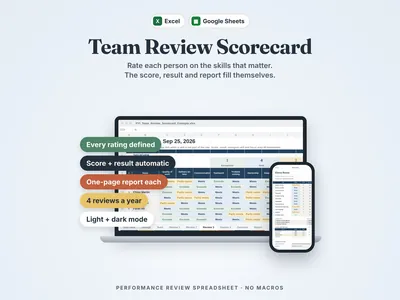
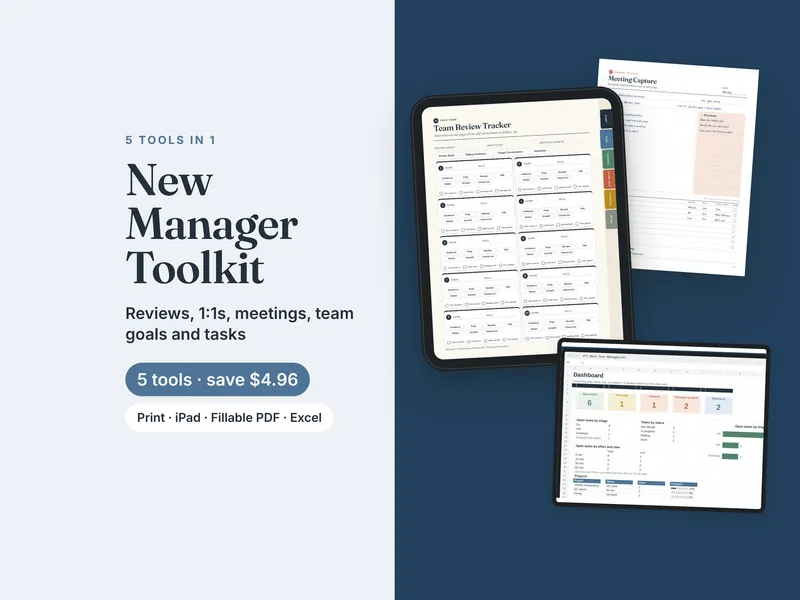
The New Manager Toolkit brings this plan together in six tools: a Manager's 1:1 & Team Pack (My First 90 Days, Five Conversations with My Boss, a Team Listening Tour, Our First 1:1, a 48-question 1:1 bank, a Delegation Planner and a Team Working Agreement), Meeting Notes, a 12-Week Planner for team goals, a Work Task Manager spreadsheet, a Priority Planner and the full Manager's Performance Review Kit. If you only need the weekly 1:1 pages, start with the Weekly 1:1 Template or the Meeting Notes & Action Tracker. See the new manager toolkit page for everything inside.
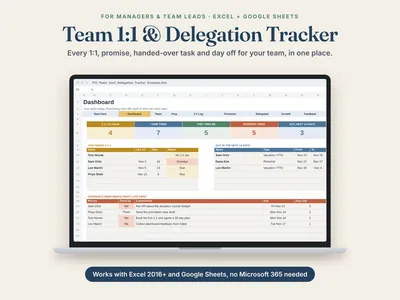
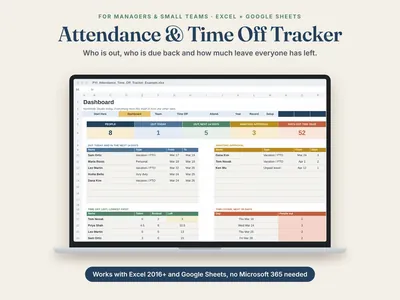
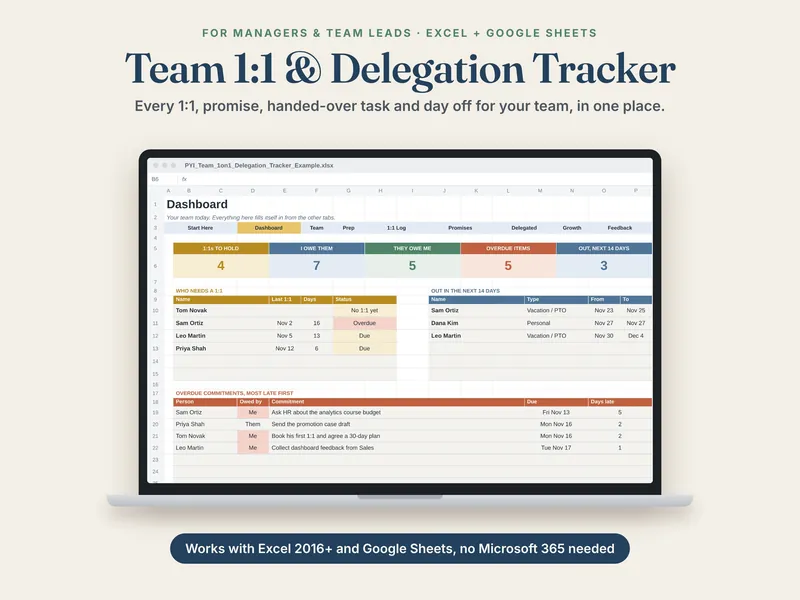
Two spreadsheets help once the team is yours: the Team 1:1 & Delegation Tracker keeps everyone's 1:1 notes, promises and delegated work in one place, and the Attendance & Time Off Tracker shows who's out today, who's off in the next two weeks and how much leave each person has left.
Free printable pages
Spend your first 90 days on what matters
Get The Priority Pages free: seven printable pages, including a Roles & Goals Weekly Plan and a one-page Delegation Agreement for handing work to your new team.
Weekly for the first three months, 30 minutes each. Move to every two weeks once you know each person well, if they prefer.
Should I write a 30-60-90 day plan as a new manager?
Yes. Share it with your manager in week one. It shows how you're thinking and gives you both something to review at day 90. Our guide on how to write a 30-60-90 day plan has examples.
When should I start making changes?
Fix one small thing the team asked for in month two. Save bigger changes for month three or later, once you know why things work the way they do.
What if someone on the team wanted my job?
Talk about it privately and early. Acknowledge it, ask what they'd like to work on, and look for real ways to grow their role.
How do I know if my first 90 days went well?
Your team brings problems to you early, your boss agrees with your priorities, and the team can run a week without you in every decision.
How do I set boundaries with friends I now manage?
Tell them early and kindly that the job changed, not the friendship. Keep social time, but stop sharing confidential news or venting about leadership, and make work decisions the same way for everyone. Weekly 1:1s give you a normal place to talk about work, so it doesn't spill into lunch.

 By