Writing reviews for a whole team is one of the hardest parts of being a manager. Most of the stress comes from starting with a blank form and a vague memory of the year. Here's a simpler order to do it in, with example wording you can adapt.
Want a template and performance review examples? That page has a filled-in sample review, example comments and the Manager's Performance Review Kit.
Don't open the HR form first. For each person, spend 20 minutes collecting what actually happened this year: their goals from last review, project results, your 1:1 notes, praise from other teams, and anything that went wrong.
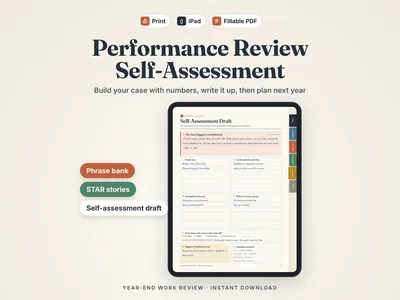
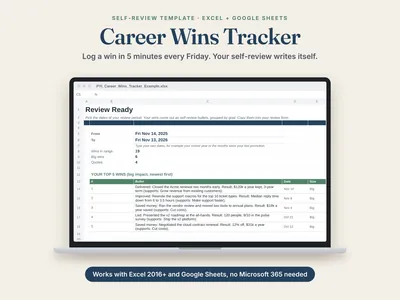
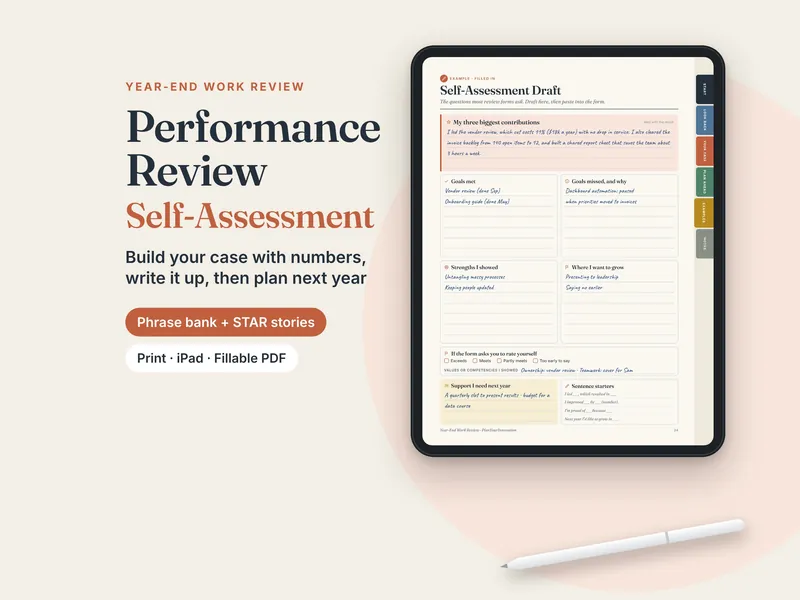
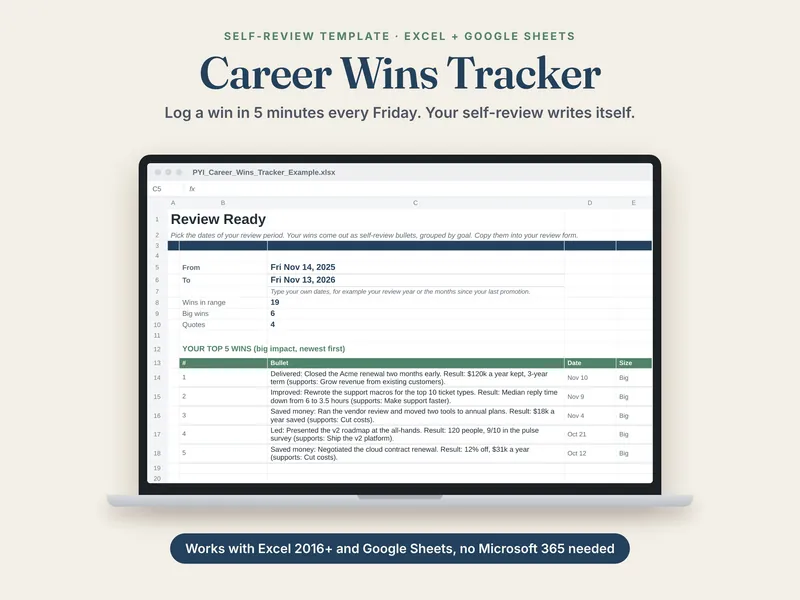
Write one line per item and put a date next to it. This is what stops a review from being built on the last two weeks, which is the most common complaint people have about their reviews. It also helps to ask each person to keep a simple brag doc before their review. My free one has a weekly log and a proof bank, and it makes their self-review and your write-up much easier.
2. Write the summary first
The summary is the paragraph people remember. Keep it to three or four sentences: the overall picture, the biggest contribution, and the one thing to focus on next.
Example: "Priya had a strong year. She took over the client reporting project in March and delivered it two weeks early, which cut our monthly reporting time from four days to one. Her next step is to share more of that work with the team, so it doesn't depend on her alone."
3. Describe results, not effort
For each goal, say what was delivered and what changed because of it. A number is best. If there isn't one, describe who noticed and what they could do afterwards.
Example: "Ran the vendor review for all six suppliers. Two contracts were renegotiated, saving about $18,000 a year, and the new review checklist is now used by the whole department."
4. Be specific about strengths and growth areas
Vague praise and vague criticism are both hard to act on. Some swaps that help:
Instead of "great communicator", write "her weekly project update kept three teams aligned without extra meetings".
Instead of "needs to be more proactive", write "flag risks when they appear, not at the deadline. Two launches this year slipped because a blocker was raised the day before".
Instead of "team player", write "trained both new hires on the reporting tool, and they were working on their own within a month".
Instead of "attention to detail could improve", write "three client reports went out with errors in Q2. A second check before sending is the goal for next year".
5. Match the rating to the evidence
Once the writing is done, the rating should almost pick itself. Before you lock it in, do a quick bias check across the whole team:
Recency: is the rating based on the whole year or the last month?
Halo: is one big win hiding a real problem, or one mistake hiding a good year?
Similar to me: are people who work the way you do scoring higher?
Middle of the scale: did everyone get a 3 because it's safe?
6. Plan the conversation
The document matters less than the meeting. Book 45 minutes, send the review a day ahead if your company allows it, and use a simple agenda:
5 minutes: how they think the year went, in their words.
15 minutes: walk through the summary and results.
10 minutes: strengths and one or two growth areas, with examples.
10 minutes: goals for next year and what support they need.
5 minutes: agree the next step and a date to check in.
7. Follow up at 30, 60 and 90 days
A review that's never mentioned again feels like a formality. Put three short check-ins in your calendar now, and start a running evidence log for each person so next year's review takes half the time.
Templates that do this with you
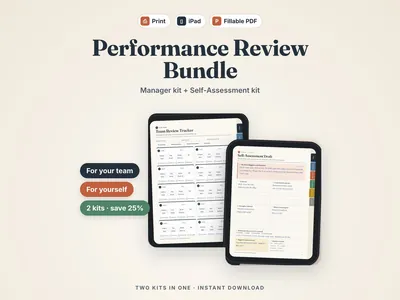
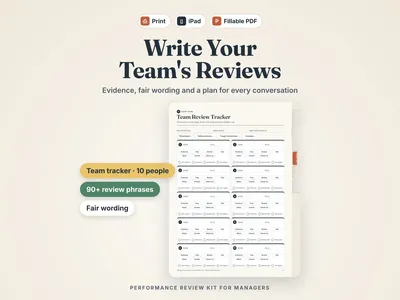
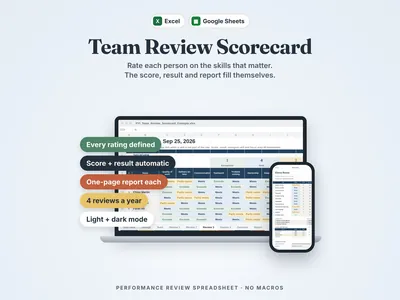
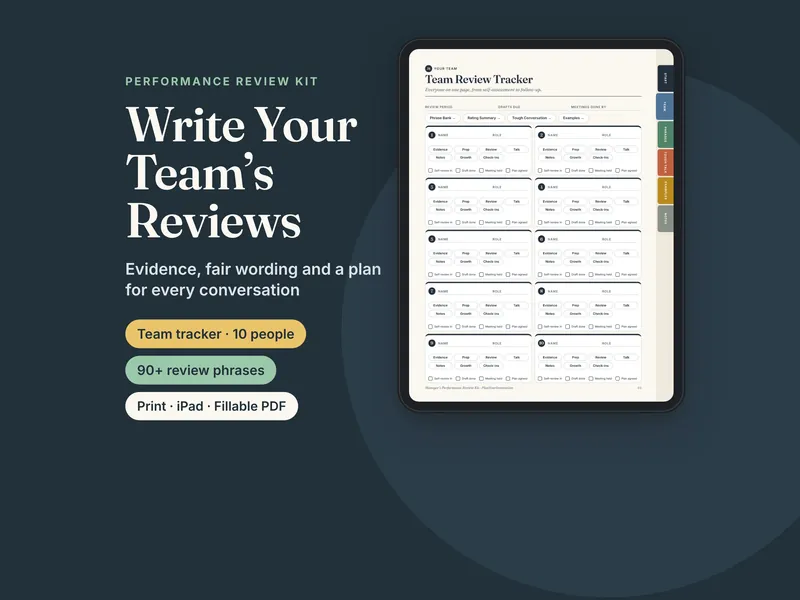
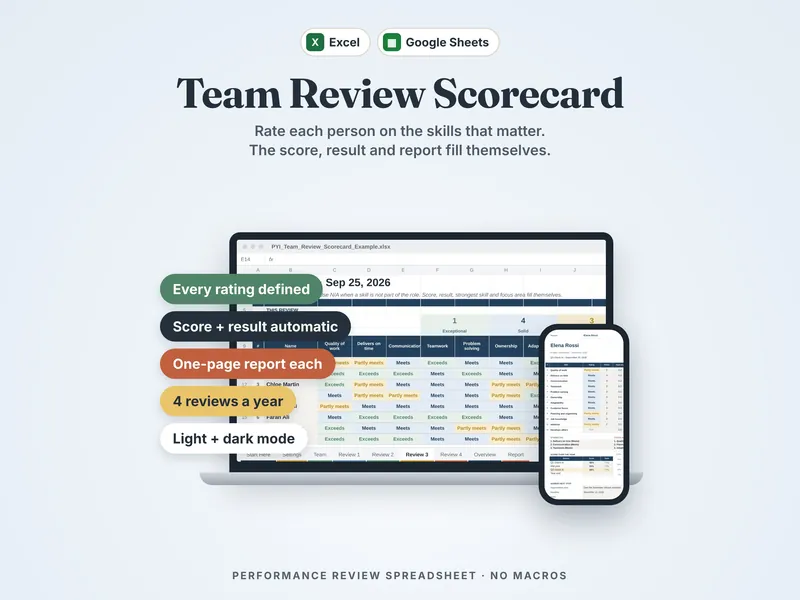
The Manager's Performance Review Kit follows these exact steps: an Evidence Log, a Review Writing Worksheet with examples, a two-page phrase bank with more than 90 lines, a Rating Summary with a bias check, a Conversation Plan and 30-60-90 day check-ins. If you prefer a spreadsheet for the ratings, the Team Review Scorecard scores each person on 12 defined skills and prints a one-page report for the conversation.
Get a free one-page performance review form: results against goals, strengths, areas to grow, a rating with clear levels and a 90-day plan. Fillable, Letter and A4.
Free. Plus a short work-planning tip about once a week. Unsubscribe anytime.
Gather evidence for the whole period first, then write a two-sentence summary, three strengths with examples, one or two growth areas and a rating that matches the evidence. End with goals for the next 90 days.
How long should a performance review be?
For most forms, a three-to-four sentence summary, a short paragraph per goal, two or three strengths and one or two growth areas. That's usually 400 to 800 words per person.
How do I write a review for someone who is struggling?
Be specific and early. Name the gap with examples, say what good looks like, and agree a plan with dates. The review should never be the first time they hear about the problem.
Should employees see the review before the meeting?
If your company allows it, sending it a day ahead usually makes the conversation calmer and more useful. People can read it, react privately and come with questions.
How early should I start?
Two to three weeks before reviews are due, especially with a team of five or more. Gathering evidence takes longer than writing.

 By