Most performance reviews are written the night before they're due, and it shows: "great team player", "needs to improve communication" and nothing the person can act on. The hard part is the wording. You know how someone did, but "great job this year" doesn't say much, and "needs to improve" says even less. This page has 120 performance review phrases for the 12 skills most reviews cover, from quality of work and job knowledge to initiative, dependability and teamwork. Each skill has phrases for exceeds, meets and needs improvement, plus two lines you can use in your own self-review. Copy one, add a real example, and the review writes itself.
A phrase is only the start of a sentence. On its own it sounds like a template, because it is one. What makes it fair and believable is the example you add after it. Use this simple pattern for every skill you comment on: phrase + example + impact.
For example: "Jordan's work is accurate and complete, and others rarely need to check it. (Phrase.) The monthly report went out with no corrections all year. (Example.) That let us drop a review step and send it two days sooner. (Impact.)"
Three quick before-and-afters show the difference:
Vague: "Great team player." Clear: "Shares information freely and helps others without being asked. Covered Sam's accounts for six weeks in May with no missed deadlines."
Vague: "Needs to improve communication." Clear: "Updates sometimes come late. Two project delays this year were only flagged on the due date. Aim to raise a slip as soon as it's likely."
Vague: "Shows initiative." Clear: "Spots what needs doing and acts on it. Built the shared report sheet nobody asked for, which saves the team about 3 hours a week."
What do the rating levels mean?
The phrases below are grouped by the rating they fit. Most companies use four levels, sometimes with different names. These are the definitions our Team Review Scorecard uses:
Exceeds: goes clearly beyond what the role asks, again and again, and lifts the people around them.
Meets: does what the role asks, reliably and to a good standard. This is a good rating, and most people should get it for most skills.
Partly meets (needs improvement): meets some of what the role asks, and needs support or practice in places.
Below: falls short of what the role asks, and needs a clear plan with regular check-ins.
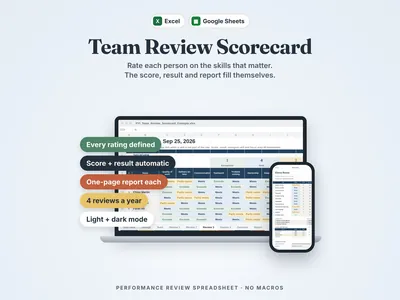
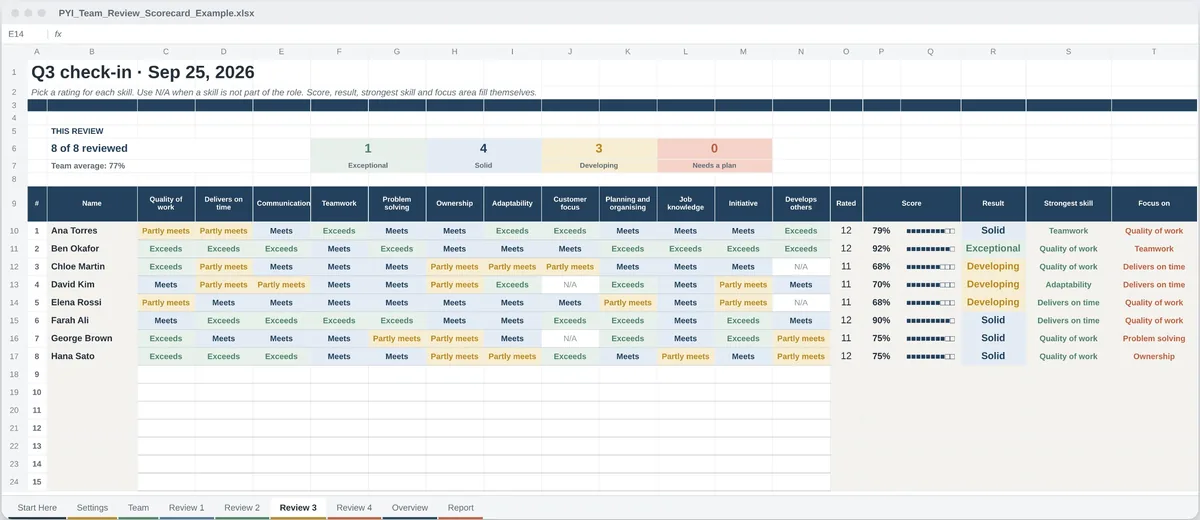
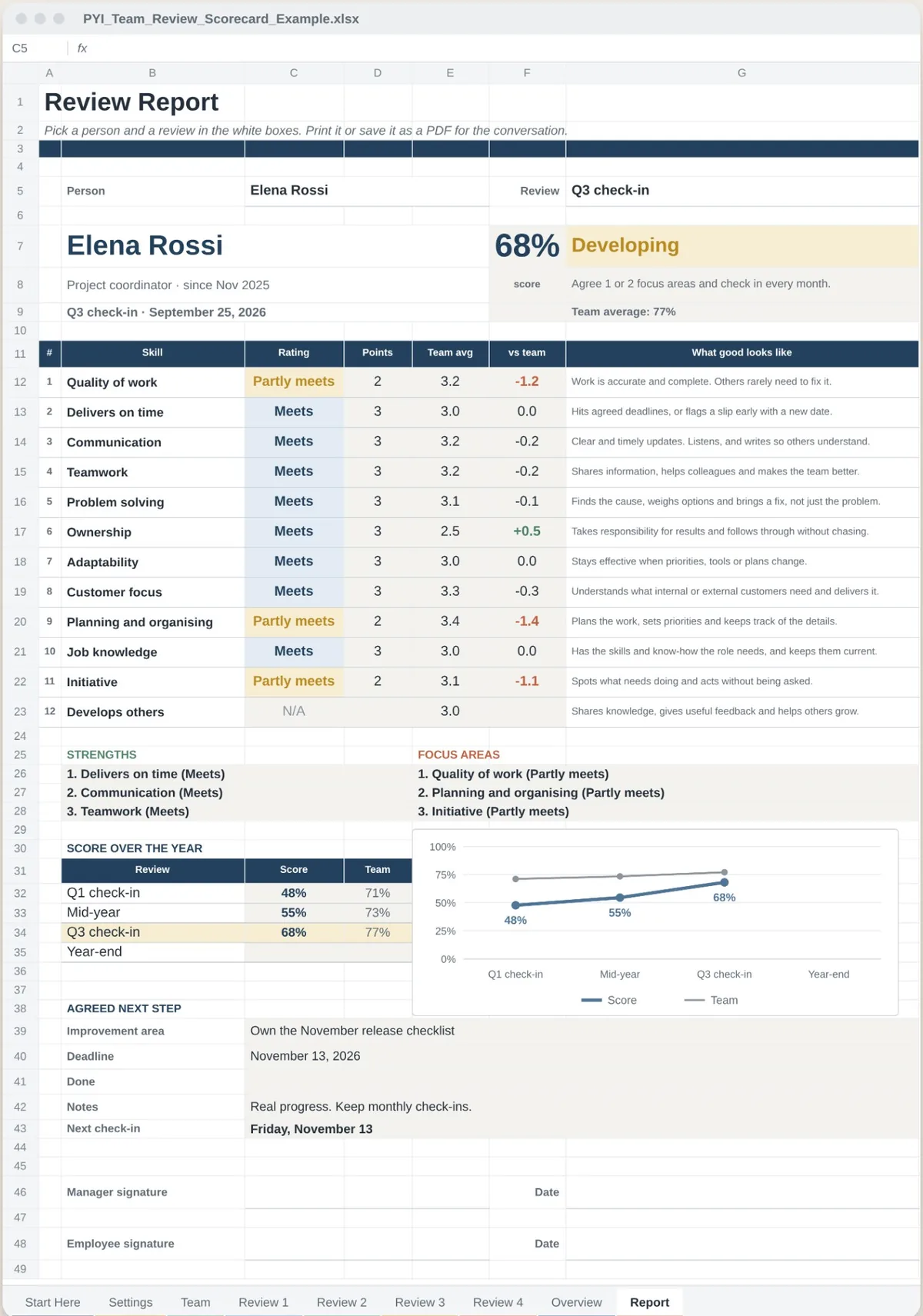
The same 12 skills in our Team Review Scorecard: one rating per skill, and the score, result and focus area fill in.
Write "needs improvement" comments as something to work on, with an example and a next step, never as a label. The phrases below are written that way. For a Below rating, use the needs-improvement phrases and add a written plan with dates.
Performance review phrases by skill
Each skill starts with what good looks like, then has three phrases for exceeds, three for meets, two for needs improvement and two for your own self-review.
1. Quality of work
What good looks like: work is accurate and complete, and others rarely need to fix it.
Exceeds: "Produces consistently accurate, thorough work that others use as the standard."
Exceeds: "Catches errors before they reach anyone else, including problems in other people's work."
Exceeds: "Holds a high bar for quality even under tight deadlines, and finds ways to make the work faster without cutting corners."
Meets: "Work is accurate and complete, and rarely needs to be redone."
Meets: "Checks their own work carefully and follows the team's standards."
Meets: "Delivers work that is ready to use, with clear notes when something is unfinished."
Needs improvement: "Work sometimes needs corrections before it can be used. Building in a final check before sending would help."
Needs improvement: "Attention to detail varies on routine tasks. Let's agree a short checklist for the monthly report."
Self-review: "My work on [project] went out with no corrections, and the team now uses my format as the standard."
Self-review: "I want to keep quality high as my workload grows, so I've started a checklist for every report I send."
2. Dependability and delivering on time
What good looks like: hits agreed deadlines, or flags a slip early with a new date.
Exceeds: "Completely dependable. When they say it will be done, it's done, and often early."
Exceeds: "Sees delays coming before anyone else, and arrives with a new plan instead of an excuse."
Exceeds: "The person the team relies on when a deadline can't move."
Meets: "Meets agreed deadlines and keeps commitments."
Meets: "Flags slips early and gives a realistic new date."
Meets: "Can be counted on to follow through without reminders."
Needs improvement: "Several deadlines this year were missed without warning. Raising a risk as soon as it appears would let us adjust in time."
Needs improvement: "Commits to more than fits in the week. Let's review priorities together before new work is accepted."
Self-review: "I delivered [number] of [number] projects on time, and flagged the one that slipped on the day I knew."
Self-review: "I'm working on saying no sooner, so the commitments I make are ones I can keep."
3. Communication
What good looks like: clear and timely updates. Listens, and writes so others understand.
Exceeds: "Explains complex topics simply, so people at every level understand and can act."
Exceeds: "Their written updates are clear enough that meetings about the same topic are rarely needed."
Exceeds: "Listens closely, asks the question others missed, and makes sure decisions are written down."
Meets: "Keeps the right people informed, at the right time."
Meets: "Writes clear, concise emails and updates."
Meets: "Listens well and responds thoughtfully, including to disagreement."
Needs improvement: "Updates can be long and hard to act on. Leading with the main point and the ask would help."
Needs improvement: "Problems are sometimes shared late. Let's agree what should be raised straight away."
Self-review: "I started a one-page weekly update that cut status meetings from three a week to one."
Self-review: "I want to get better at presenting to senior leaders, and I'd like to present our results twice next year."
4. Teamwork (being a team player)
What good looks like: shares information, helps colleagues and makes the team better.
Exceeds: "A true team player who makes everyone around them more effective."
Exceeds: "Steps in to help colleagues without being asked, and shares credit generously."
Exceeds: "Brings people together across teams and settles disagreements before they grow."
Meets: "Works well with others and shares information freely."
Meets: "Helps colleagues when asked and keeps their part of shared work moving."
Meets: "Treats everyone with respect and is easy to work with."
Needs improvement: "Tends to work alone and share results late. Bringing others in earlier would strengthen the work."
Needs improvement: "Disagreements in meetings sometimes become personal. Let's work on keeping debate on the work."
Self-review: "I covered two accounts for four months when we lost a colleague, and we missed no deadlines."
Self-review: "I trained [name] on the new system, and they now run it on their own."
5. Problem solving
What good looks like: finds the cause, weighs options and brings a fix, not just the problem.
Exceeds: "Gets to the root cause of hard problems and fixes them for good."
Exceeds: "Comes with options and a recommendation, not just the issue."
Exceeds: "Stays calm in a crisis and finds a practical way through."
Meets: "Solves day-to-day problems on their own and asks for help when it's needed."
Meets: "Thinks through options before acting."
Meets: "Learns from problems so the same one doesn't happen twice."
Needs improvement: "Tends to bring problems without a suggested fix. Coming with one or two options would speed up decisions."
Needs improvement: "Sometimes fixes the symptom rather than the cause. Let's practice asking 'why' a few times before acting."
Self-review: "I found why invoices were stuck and changed the process. The backlog went from 140 items to 12."
Self-review: "When the vendor changed mid-project, I re-planned with the team and recovered most of the lost time."
6. Ownership and accountability
What good looks like: takes responsibility for results and follows through without chasing.
Exceeds: "Owns outcomes, not just tasks, and treats the team's goals as their own."
Exceeds: "Admits mistakes quickly, fixes them and makes sure they don't happen again."
Exceeds: "Takes on unclear work and makes it clear."
Meets: "Takes responsibility for their work and its results."
Meets: "Follows through on commitments without needing reminders."
Meets: "Owns up to mistakes and learns from them."
Needs improvement: "Tasks sometimes stall waiting for someone else. Following up directly would keep them moving."
Needs improvement: "When things go wrong, the focus can go to who caused it. Let's focus on the fix first."
Self-review: "I took over vendor management when Sam moved teams, with no missed renewals."
Self-review: "I made a mistake on the Q2 forecast, flagged it the same day and added a check so it can't happen again."
7. Adaptability
What good looks like: stays effective when priorities, tools or plans change.
Exceeds: "Thrives when plans change and helps others adjust quickly."
Exceeds: "Was among the first to learn the new system and now helps others use it."
Exceeds: "Stays productive and positive through reorganizations and shifting priorities."
Meets: "Adjusts well to new priorities and processes."
Meets: "Open to new ideas and willing to try a different approach."
Meets: "Stays effective when things change at short notice."
Needs improvement: "Changes in plans can slow progress for a while. Asking early what the change means for their work would help."
Needs improvement: "Can be slow to adopt new tools. Let's set aside time for training on the new system this quarter."
Self-review: "When priorities moved to invoices in July, I switched projects within a week."
Self-review: "I learned the new billing system and now support it for the team."
8. Customer focus
What good looks like: understands what internal or external customers need and delivers it.
Exceeds: "Understands what customers need, sometimes before they say it, and builds the work around it."
Exceeds: "Turns unhappy customers into loyal ones."
Exceeds: "Uses customer feedback to improve how the whole team works."
Meets: "Responds to customers promptly and professionally."
Meets: "Understands customer needs and meets them."
Meets: "Keeps customers informed when something changes."
Needs improvement: "Responses to customers can be slow. Let's agree a target reply time and track it."
Needs improvement: "Sometimes focuses on the process over what the customer needs. Asking what they're trying to achieve first would help."
Self-review: "I wrote a client FAQ that cut support tickets 25%."
Self-review: "My customer satisfaction score rose from [number] to [number] this year."
9. Planning and organization
What good looks like: plans the work, sets priorities and keeps track of the details.
Exceeds: "Plans complex work clearly and keeps many moving parts on track."
Exceeds: "Sets priorities that match the team's goals and protects time for the important work."
Exceeds: "Their trackers and plans are the ones the whole team uses."
Meets: "Organizes their work well and meets priorities."
Meets: "Keeps track of the details and rarely drops anything."
Meets: "Plans ahead for busy periods."
Needs improvement: "Urgent requests often push out important work. Let's plan the week's top three outcomes together on Mondays."
Needs improvement: "Details sometimes slip during busy weeks. One task list for everything would help."
Self-review: "I built the team's project tracker. Everyone now updates one Gantt chart instead of three spreadsheets."
Self-review: "I plan my week every Monday, which is how I fit the vendor review around my core work."
10. Job knowledge
What good looks like: has the skills and know-how the role needs, and keeps them current.
Exceeds: "Has deep knowledge of the role, and is the go-to person for [area]."
Exceeds: "Keeps their skills current and brings new ideas back to the team."
Exceeds: "Understands how their work fits the wider business and uses that to make better decisions."
Meets: "Has the knowledge and skills the role needs."
Meets: "Applies what they know well in day-to-day work."
Meets: "Keeps up to date with changes in tools and processes."
Needs improvement: "Still building knowledge in [area], which slows some tasks. Let's pair them with [name] for the next two months."
Needs improvement: "Relies on others for questions they could answer with training. A course in [skill] this quarter would help."
Self-review: "In January I couldn't write a SQL query. Now I pull my own data for the monthly report."
Self-review: "I completed [course or certification] and used it to [result]."
11. Initiative
What good looks like: spots what needs doing and acts without being asked.
Exceeds: "Regularly finds problems nobody asked them to fix, and fixes them."
Exceeds: "Proposes improvements with a plan and sees them through."
Exceeds: "Takes on stretch work and does it well."
Meets: "Acts on what needs doing without waiting to be asked."
Meets: "Suggests improvements to their own work and the team's processes."
Meets: "Volunteers for new tasks when they have capacity."
Needs improvement: "Tends to wait for direction. I'd like to see them suggest one improvement each month."
Needs improvement: "Has good ideas but doesn't always act on them. Let's pick one to own next quarter."
Self-review: "I noticed we rebuilt the same report every month, so I automated it. It saves 3 hours a week."
Self-review: "I volunteered to lead the vendor review, which saved $18k a year."
12. Developing others
What good looks like: shares knowledge, gives useful feedback and helps others grow.
Exceeds: "Makes the people around them better through coaching and honest feedback."
Exceeds: "Two people they mentored took on bigger roles this year."
Exceeds: "Shares what they know freely and writes it down so others can learn."
Meets: "Helps new colleagues get up to speed."
Meets: "Gives useful, kind feedback when asked."
Meets: "Shares knowledge and answers questions patiently."
Needs improvement: "Tends to do work themselves rather than show others how. Training a colleague on one process this quarter would help."
Needs improvement: "Feedback to others can be vague. Let's practice giving one specific example each time."
Self-review: "I trained two new hires, and both were working on their own by week 3."
Self-review: "I wrote the onboarding guide that new team members now use in their first week."
Overall comments for a performance review
Most forms end with an overall comment. Keep it to two or three sentences: the headline of the year, the main strength and the one thing to focus on next. Some examples:
Exceeds: "Jordan had an outstanding year. Their work on month-end close made our whole process faster, and their problem solving is the team's biggest asset. Next year, the focus is leading a cross-team project."
Exceeds: "Priya took on two new areas this year and excelled in both. She is ready for more responsibility, and we'll discuss a path to senior analyst."
Meets: "A solid, reliable year. Sam met every deadline and is a dependable part of the team. Next year, I'd like to see more initiative in suggesting improvements."
Meets: "Ana delivered what the role asks to a good standard. Her customer focus stood out. The development area is presenting her work to senior audiences."
Needs improvement: "Leo did good work on the reporting project, but deadlines and updates were inconsistent. We've agreed a plan with monthly check-ins to support him."
Needs improvement: "This was a year of learning in a new role. The focus for the next six months is job knowledge in billing, with training and regular support."
A one-page report per person: ratings by skill, strengths, focus areas and the agreed next step.
How do you use these phrases in your own self-review?
Write about yourself in the first person and lead with results. The self-review lines above show the pattern: what you did, then what changed. Pick your three strongest skills, add one example and one number to each, and you have the core of a self-evaluation.
Personality labels: "lazy", "difficult", "negative". Describe the behavior and its effect instead.
Always and never: "always late", "never helps". They're rarely true and they start arguments.
Comparisons with colleagues: "not as strong as Sam". Compare the work to the role, not to people.
Comments about age, family, health or personal life: they don't belong in a review.
Empty praise: "rock star", "great attitude". Add what they did, or the praise means little.
Surprises: a serious problem raised for the first time in the annual review. It should have come up in a 1:1.
A fair review uses the same skills and the same rating definitions for everyone. That's the easiest way to keep wording consistent across a team, and to make sure a "meets" from you means the same thing for every person.
What problems does the Team Review Scorecard solve?
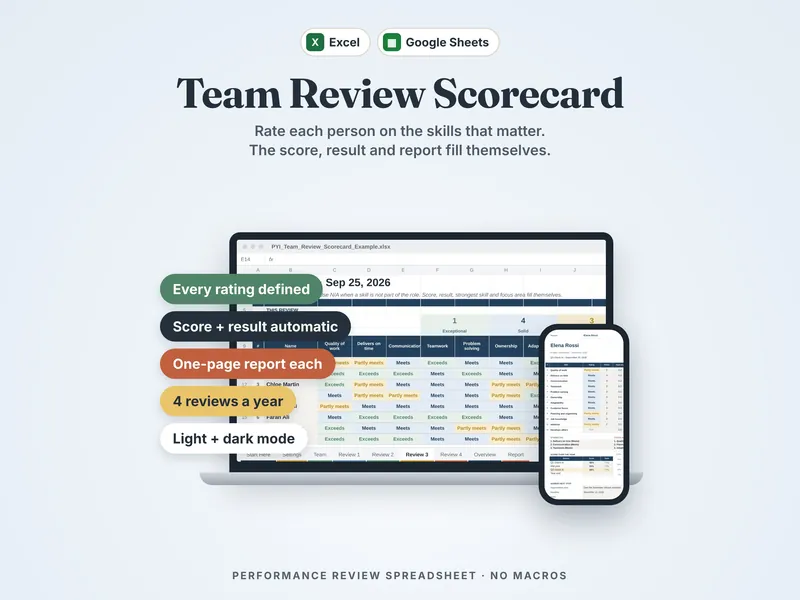
Good phrases help you write one review. Fair reviews across a whole team need a system. The Team Review Scorecard gives you one, in Excel or Google Sheets:
The problem: Ratings drift from person to person, and "meets" means something different every time. How it helps: Every rating level and each of the 12 skills has a one-line definition of what good looks like, used for everyone.
The problem: Working out scores and strengths for each person takes hours. How it helps: Pick a rating from a dropdown and the score, result, strongest skill and focus area fill in for you.
The problem: You walk into the review conversation unprepared. How it helps: The Report tab prints a one-page summary for each person, with ratings against the team average and the agreed next step.
The problem: Development goals are agreed and then forgotten. How it helps: Each person gets an improvement area with a deadline and a Done tick. Overdue deadlines turn red.
Templates that help
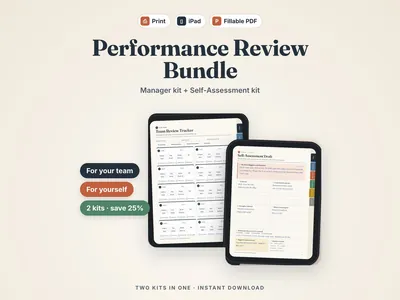
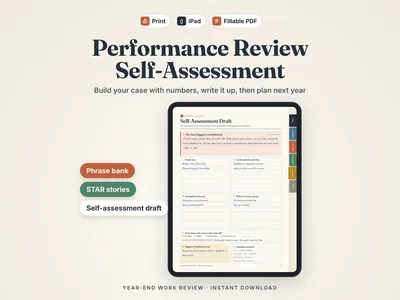
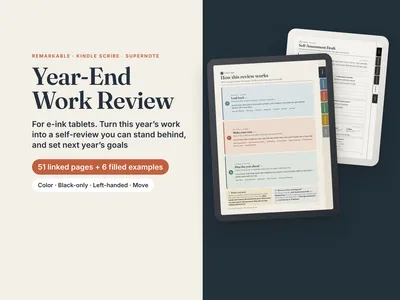
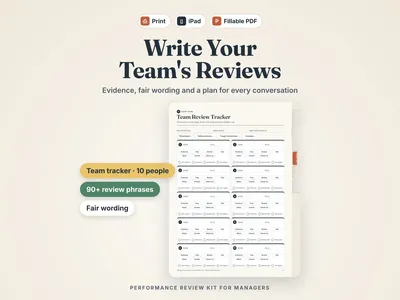
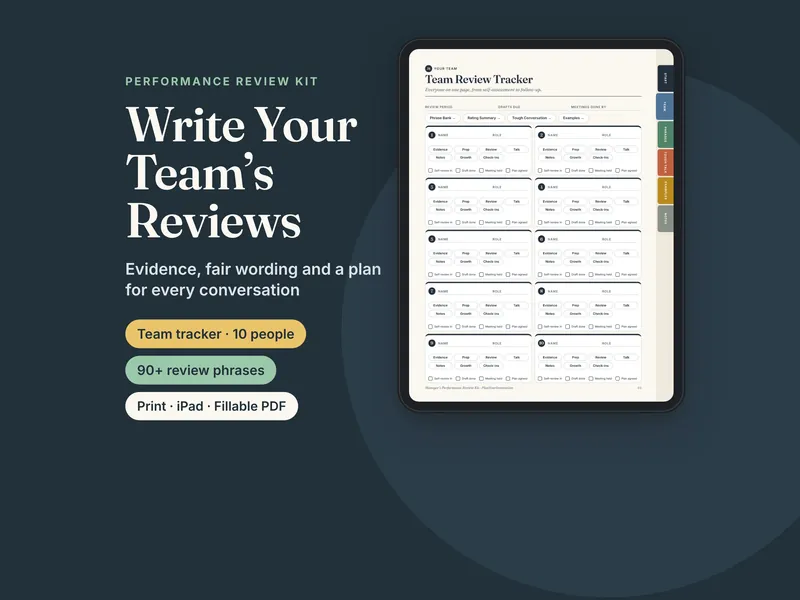
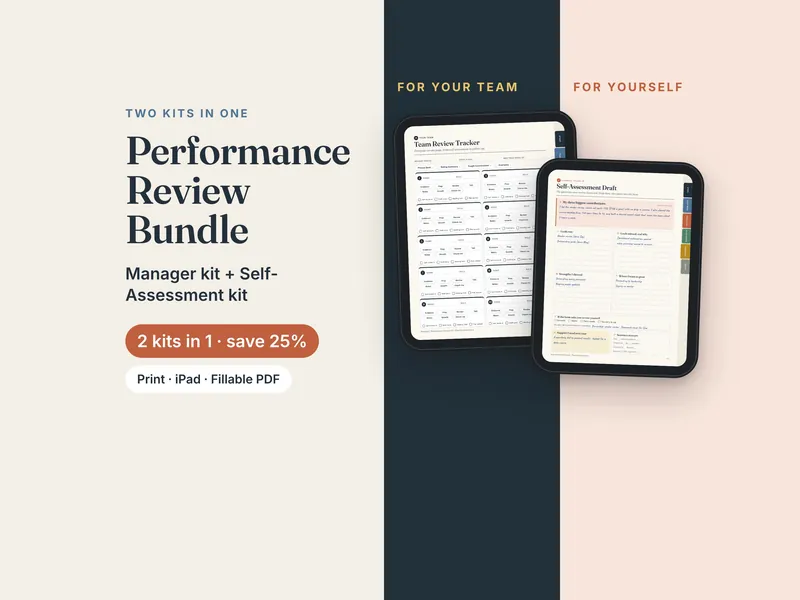
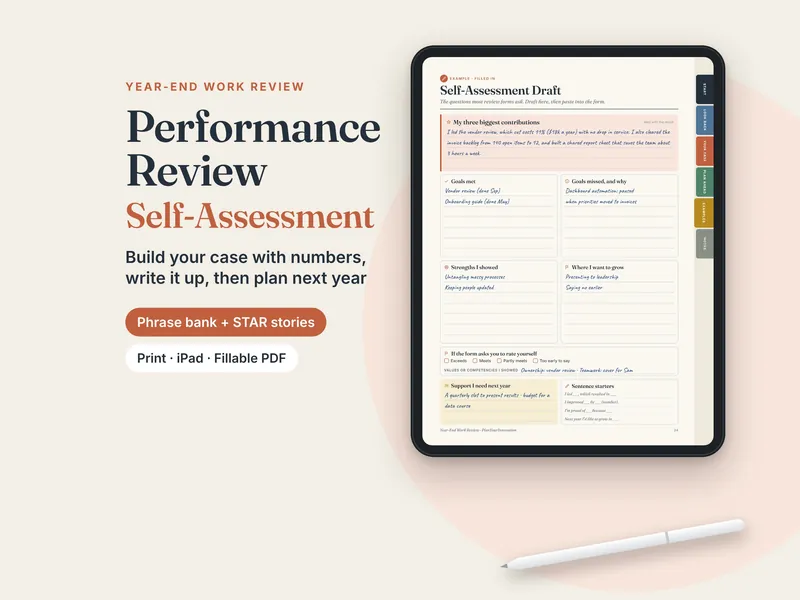
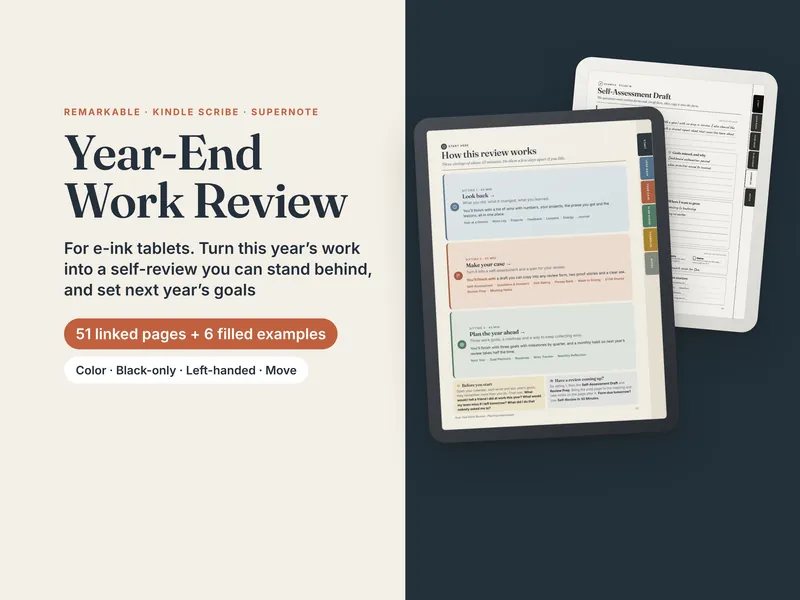
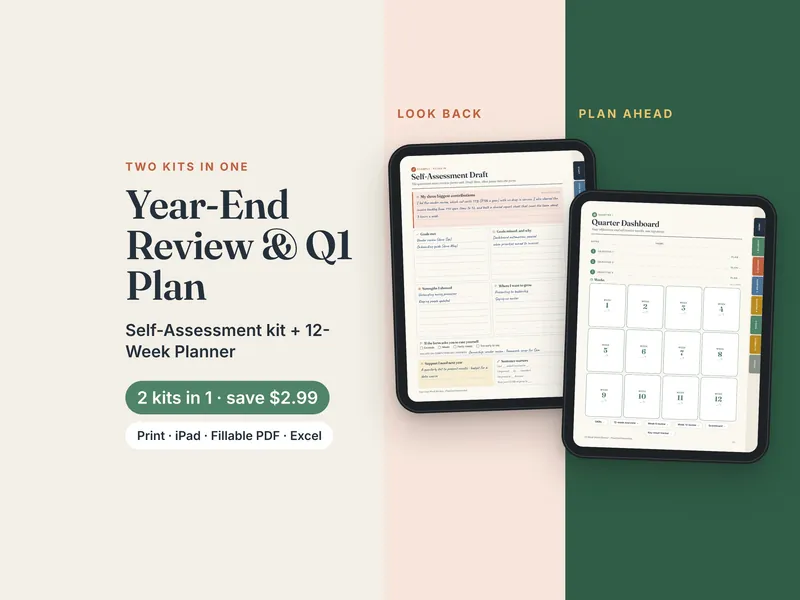
The Team Review Scorecard is built around the same 12 skills and rating levels as this page. Pick a rating for each skill and each person's score, result, strongest skill and focus area fill in for you, in Excel or Google Sheets. A one-page report for each person is ready to print for the conversation. To write the review itself, the Manager's Performance Review Kit walks you through gathering evidence, writing a fair review, holding the conversation and following up at 30, 60 and 90 days. The Performance Review Bundle adds the Year-End Work Review for your own self-assessment. See all our performance review templates and examples.
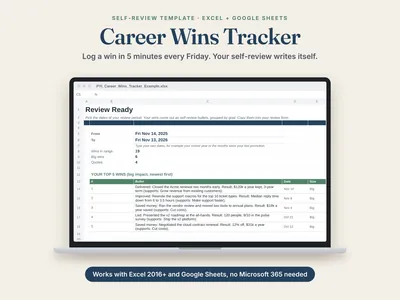
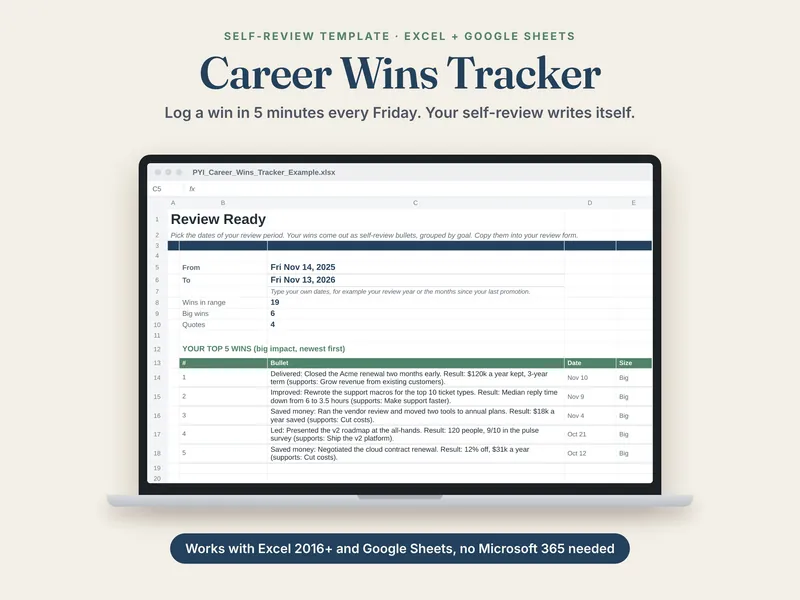
Writing your own review? Phrases work best with evidence behind them. The Career Wins Tracker logs your wins every Friday and turns each one into a review statement you can pair with the lines on this page.
Free download
Back every review phrase with proof
Get my free Self-Review Brag Doc: log one line on Fridays, and you'll have the wins and numbers that make these phrases believable.
One or two per skill you comment on, each followed by a real example. Most reviews cover five to eight skills, so ten to fifteen sentences is plenty.
What's a good phrase for quality of work?
"Work is accurate and complete, and rarely needs to be redone" for meets, or "Produces consistently accurate, thorough work that others use as the standard" for exceeds. Add one example of the work.
How do you write a needs-improvement comment without being harsh?
Describe the behavior, give one example, and end with a next step: "Several deadlines were missed without warning. Raising a risk as soon as it appears would let us adjust in time."
Can I use these phrases in my own self-evaluation?
Yes. Rewrite them in the first person and add your own results, or use the self-review lines under each skill as a starting point.
Should every skill get a comment?
No. Comment on the three to five that matter most for the role this year, and keep the rest to a rating. A short, specific review is more useful than a long, general one.
 By