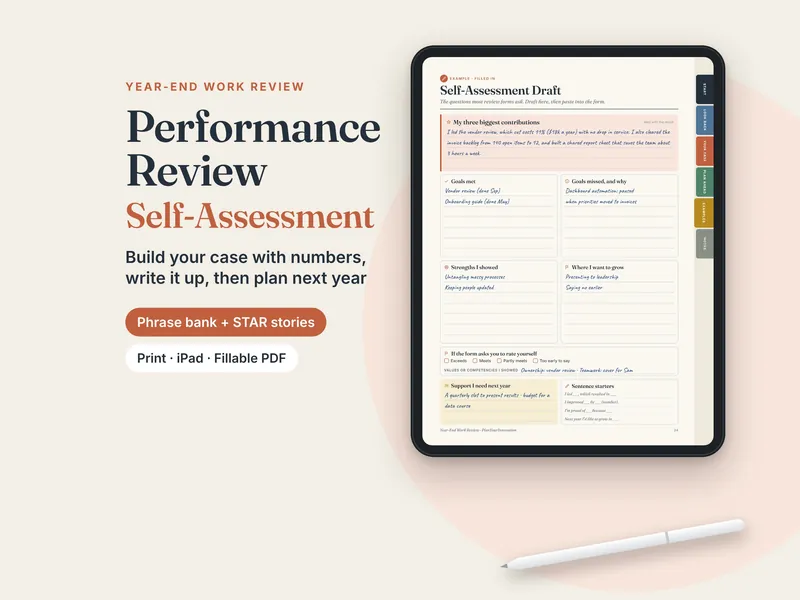
Year-End Work Review Kit
A self-assessment kit: turn this year's work into a self evaluation you can stand behind, go in with a clear ask, and set 2027 goals.
- Fillable PDF
- iPad
$7.99View on Etsy →
Guide
A self-evaluation is your chance to tell your manager what you did this year, what it changed, and what you want next. Most people write it in one rushed evening and undersell themselves. Here's a simpler way to do it, with example answers you can adapt.
Don't start with the form. Start with a list. Open your calendar, your sent email, your project tools and last year's goals, and write one line for each month: what you worked on, what shipped, and anything you're proud of. Most people forget at least half of what they did between January and June.
Next to each item, write the result. A number is best: hours saved, revenue, tickets closed, customers kept, deadlines met. If there's no number, write what changed because of your work, or who noticed it.
Your manager won't remember a list of twenty items. Choose three to five that matter most to your team's goals, and describe each one with a short version of the STAR method: the situation, what you did, and the result.
Example: "Our onboarding emails had a 22% open rate and new customers were asking support the same five questions. I rewrote the sequence and added a setup checklist. Open rates rose to 41% and onboarding tickets fell by a third in the first quarter."
Notice what this does: it starts with the problem, says what you did in the first person, and ends with a number. That's the pattern for every accomplishment.
Most forms ask for areas to improve. Skipping it, or writing "I work too hard," makes the rest of your review harder to trust. Pick one real thing, say what you learned, and say what you'll do differently.
Example: "I took on too many projects in Q2 and the vendor review slipped by three weeks. I now agree a capacity check with my manager before I accept new work, and I flag risks a week before a deadline instead of the day before."
Replace vague words with evidence. Some swaps that help:
Close with two or three goals for next year that connect to your team's priorities, and say what support you need. If you want a promotion, a raise, new scope or training, say so here and point to the evidence above. A review is much easier for a manager to argue for when you've written down the case.
Example: "Next year I want to lead the onboarding redesign end to end. To do that well, I'd like to take the project management course in Q1 and present results to the leadership team in Q3."
If your form asks for a rating, match it to your evidence. Rating yourself at the top with thin examples hurts your credibility, and rating yourself low to seem modest can anchor your manager's rating too. If your evidence is strong, say so plainly.
The Year-End Work Review Kit turns these steps into pages: Year at a Glance, a Wins & Brag Log, a Self-Assessment Draft with sentence starters, a 24-line phrase bank, a STAR Story Builder and Review Meeting Prep for your ask. It's a fillable PDF with a printable and an iPad version. See the self-evaluation template page for everything inside, or get the Year-End Review & Q1 Plan bundle to turn your new goals into a 12-week plan.
Templates in this guide
A self-assessment kit: turn this year's work into a self evaluation you can stand behind, go in with a clear ask, and set 2027 goals.
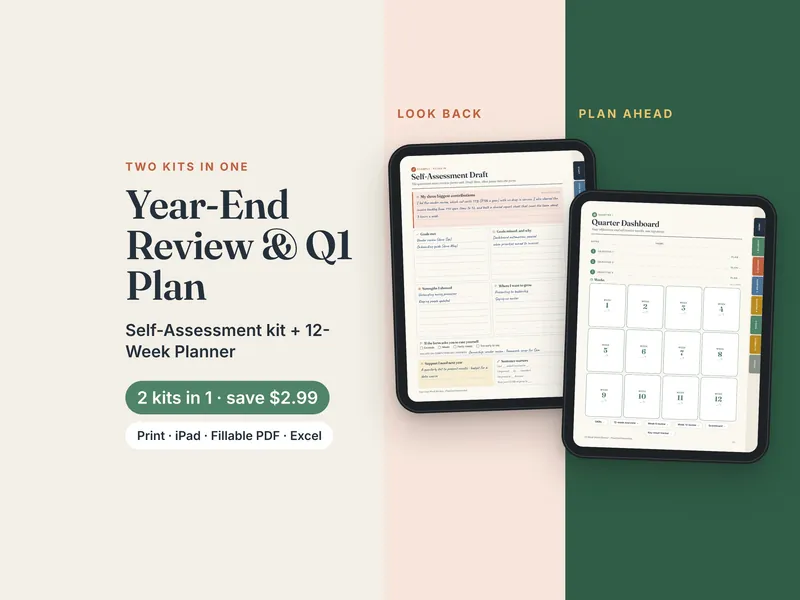
Write a self-assessment you can stand behind, then turn next year's goals into a 12-week plan with a score every Friday.

Both review kits: the Year-End Work Review for your own self assessment and the Manager's Kit for your team.
Questions
Long enough to cover three to five accomplishments, one growth area and your goals. For most forms, that's 300 to 700 words in total.
Yes, briefly. One honest example with what you learned builds trust in the rest of the review.
One to two weeks before it's due. Collecting your year takes longer than writing it.