A performance improvement plan is one of the hardest documents a manager writes. Done badly, it's a vague warning that feels like the first step out the door. Done well, it's a fair, specific plan that gives someone a real chance to succeed: what's wrong, what good looks like, the support they'll get and the dates you'll check. This guide explains what a PIP is, when to use one, what to include, a filled-in template, 5 PIP examples, 20 vague vs clear goals, and what to do if you're the one on the plan, with the Performance Improvement Plan page from our Manager's Performance Review Kit.
A performance improvement plan, or PIP, is a written plan for an employee whose work isn't meeting the standard for their role. It sets out the gap, the measurable goals they need to reach, the support the manager will give, and a fixed period, usually 30, 60 or 90 days, with check-ins along the way.
A PIP is a formal step. In many companies it's also documentation that matters if things don't improve, so involve HR before you start one and follow your company's policy. This guide helps you write a clear, fair plan. It isn't legal or HR advice.
When should a manager use a PIP?
A PIP should never be the first time someone hears there's a problem. Use one when:
You've already raised the issue in 1:1s, with specific examples, and it hasn't improved.
The gap is clear and measurable, such as missed deadlines, errors, targets or behavior with dated examples.
You genuinely want it to work and can offer real support: time, training, clearer priorities.
HR agrees it's the right next step under your company's process.
If the issue is new, start with a direct conversation instead: the situation, the behavior and its impact, and the change you need by when. Many problems end there.
What to include in a performance improvement plan
Names, role, manager, start date and review date, plus the length of the plan.
The gap: what's happening, with dated examples. Facts, not opinions or labels.
What good looks like: two to four measurable goals, each with a date.
Support you'll give for each goal: training, a weekly review, cleared time, a buddy.
Check-in dates, usually every two weeks.
Possible outcomes at the review date: goals met and the plan closed, good progress and an extension, or not met and the next step under company policy.
Signatures and comments, with a line that signing shows they received it, not that they agree with every point.
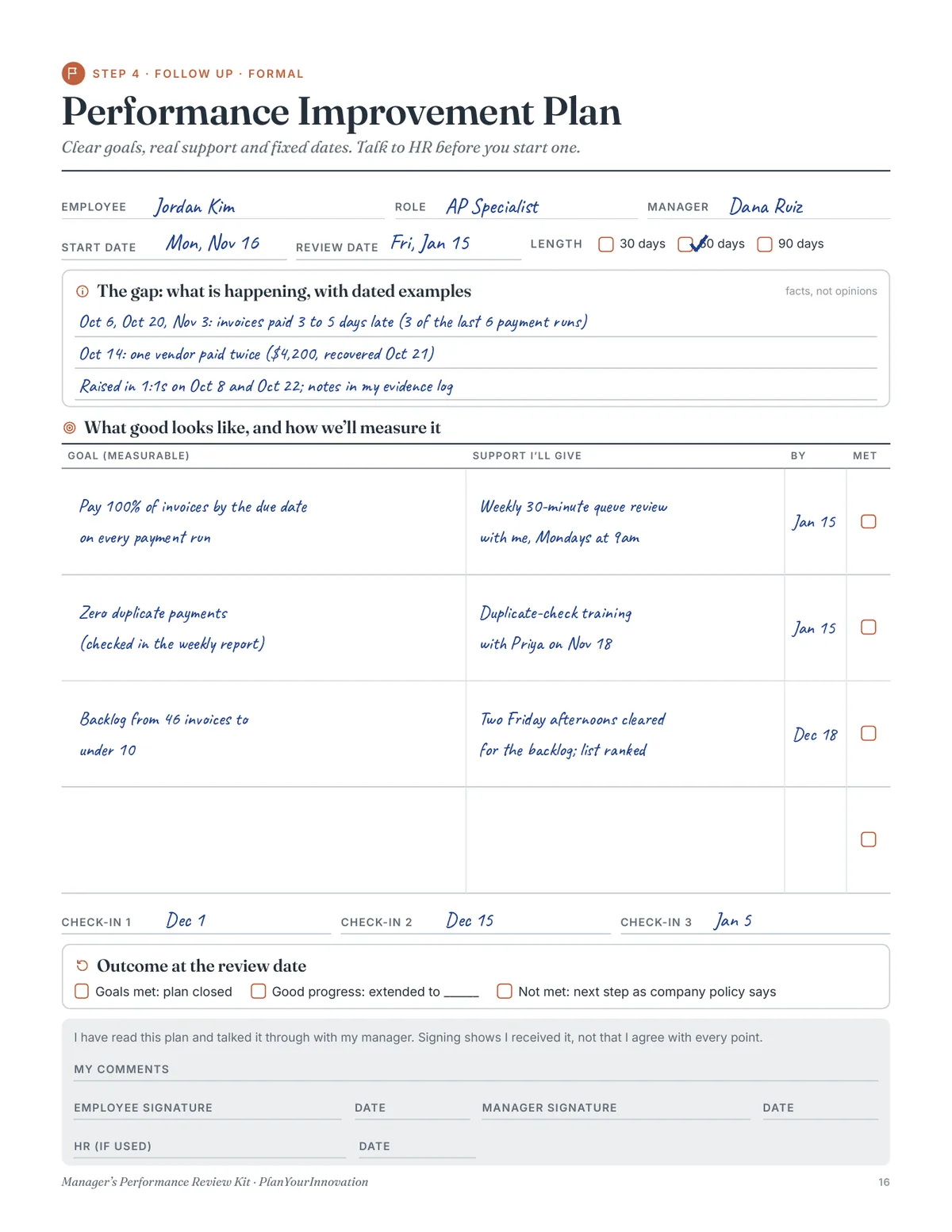
Here's a filled-in PIP template for an accounts payable specialist, with the gap written as dated facts and each goal paired with the support the manager will give:
The Performance Improvement Plan page from our Manager's Performance Review Kit, filled in for a 60-day plan.
How to write a PIP, step by step
Talk to HR about the process, the length and the paperwork your company needs.
Write the gap from your evidence log: dates, numbers and what each one changed.
Turn each gap into a measurable goal, with a date. "Pay 100% of invoices by the due date", not "improve timeliness".
Pair every goal with support. If you can't think of any, the plan isn't fair yet.
Set the length and check-in dates. Thirty days for a narrow, quick fix; 60 to 90 days for skills that take time to build.
Hold the meeting, go through the plan line by line, ask for their view and agree the first check-in.
Recap in writing the same day, and after every check-in.
5 performance improvement plan examples
Here are five PIP examples for common situations. Each one names the gap with facts, sets measurable goals and pairs them with support.
The gap: invoices paid 3 to 5 days late in 3 of the last 6 payment runs (Oct 6, Oct 20, Nov 3); one vendor paid twice on Oct 14. Goals: 100% of invoices paid by the due date; zero duplicate payments; backlog from 46 to under 10 by Dec 18. Support: a weekly 30-minute queue review with the manager, duplicate-check training on Nov 18, two Friday afternoons cleared for the backlog. Check-ins: Dec 1, Dec 15, Jan 5. Review Jan 15.
2. Quality and errors (data analyst, 60 days)
The gap: 4 of the last 8 monthly reports went out with errors found by readers (wrong totals in Jul, Aug and Oct; a missing region in Sep). Goals: zero reader-found errors in the next two monthly reports; a written check step used on every report. Support: a peer review by a senior analyst before each report for the first month; a 1-hour session on the new reconciliation checklist. Check-ins: every two weeks.
3. Customer service (support agent, 30 days)
The gap: customer satisfaction 71% over the last quarter against a team average of 89%; 6 complaints mentioning rude or curt replies. Goals: satisfaction of 85% or more for the plan period; zero complaints about tone. Support: shadowing the team's top-rated agent for two shifts; weekly review of five tickets together; reply templates for the ten most common questions. Check-ins: weekly.
4. Communication and teamwork (project coordinator, 90 days)
The gap: three handoffs this quarter went without file links or deadlines, costing the team a day each; two missed escalations reached the client first. Goals: every handoff uses the handoff checklist; escalations raised the same day; status note to the team every Friday. Support: the handoff checklist and a sample status note; a 15-minute check every Friday for the first month. Check-ins: day 30, 60 and 90.
5. Sales targets (account executive, 90 days)
The gap: 54% of quota over the last two quarters against a team average of 96%; pipeline coverage 1.2 times quota against 3 times expected. Goals: pipeline of 3 times quota by day 45; 20 qualified meetings a month; 80% of quota for the plan period. Support: weekly pipeline review with the manager; two joint calls a week for the first month; leads from the marketing campaign. Check-ins: every two weeks.
PIP wording: 20 vague vs clear
Vague wording makes a PIP feel unfair and makes it impossible to know if it worked. Here are 20 swaps.
Describing the gap
Vague: "Jordan is unreliable." Clear: "Invoices were paid 3 to 5 days late on Oct 6, Oct 20 and Nov 3."
Vague: "Poor attention to detail." Clear: "4 of the last 8 monthly reports had errors found by readers."
Vague: "Bad attitude with customers." Clear: "6 complaints this quarter mention curt replies."
Vague: "Not a team player." Clear: "Three handoffs went without file links or deadlines."
Vague: "Underperforming." Clear: "54% of quota over the last two quarters."
Setting goals
Vague: "Improve timeliness." Clear: "Pay 100% of invoices by the due date on every payment run."
Vague: "Be more careful." Clear: "Zero reader-found errors in the next two reports."
Vague: "Be nicer to customers." Clear: "Satisfaction of 85% or more for the plan period."
Vague: "Communicate better." Clear: "Send a status note to the team every Friday."
Vague: "Sell more." Clear: "Pipeline of 3 times quota by day 45."
Offering support
Vague: "Let me know if you need help." Clear: "A weekly 30-minute review with me, Mondays at 9am."
Vague: "Training is available." Clear: "Duplicate-check training with Priya on Nov 18."
Vague: "Find some time." Clear: "Two Friday afternoons cleared for the backlog."
Vague: "Learn from others." Clear: "Shadow our top-rated agent for two shifts."
Vague: "We'll support you." Clear: "Two joint client calls a week for the first month."
Check-ins and outcomes
Vague: "We'll check in." Clear: "Check-ins on Dec 1, Dec 15 and Jan 5."
Vague: "We'll see how it goes." Clear: "Review on Jan 15 against the three goals."
Vague: "Or else." Clear: "If goals aren't met, the next step follows company policy."
Vague: "Good job, I guess." Clear: "Both payment runs were on time. On track."
Vague: (no record) Clear: A recap email the same day as every check-in.
How long should a performance improvement plan be?
Most PIPs run 30, 60 or 90 days. A 30-day PIP suits a narrow, quick fix, such as timekeeping or following a process. Sixty days suits most quality and deadline issues, because it covers enough cycles to see a pattern. Ninety days suits skills that take longer to build, such as sales, leadership or communication. Whatever you choose, the length should give a fair chance to show the change at least twice.
How to run the PIP meeting and check-ins
Book a private meeting, with HR if your company asks for it, and send nothing beforehand that would surprise them.
Open in one sentence: "I want to talk about a plan to get your work back to where it needs to be, and how I'll help."
Go through the plan line by line, then ask, "What's your view?" and listen.
Agree the first check-in before you leave.
At every check-in, go goal by goal: on track, behind, or met. Give credit for progress as clearly as you name gaps.
Send a recap the same day.
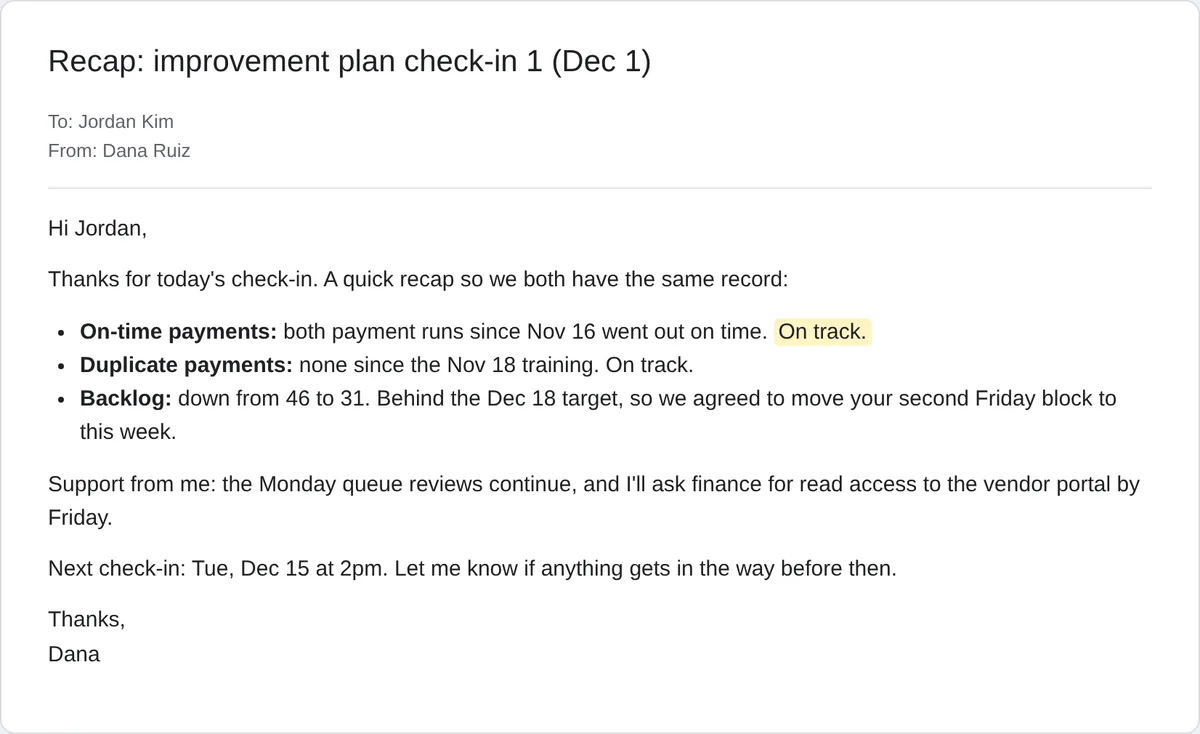
A short recap after each check-in keeps you both on the same page and records progress fairly. Here's an example after the first check-in:
Send a short recap after every check-in, with progress on each goal.
What to do if you're put on a PIP (for employees)
Being put on a PIP is stressful, but it isn't always the end. Many people complete one. A few practical steps:
Ask questions until every goal is clear: what exactly counts as met, and how it will be measured.
Ask for the support in writing, and use it.
Keep your own log of progress, with dates and numbers, and bring it to each check-in.
Add your comments to the plan if you disagree with a point. Signing usually shows you received it, not that you agree.
Decide what you want. If you want to stay, put your energy into the goals. If you'd rather move on, it's reasonable to start looking quietly while you work the plan.
Common PIP mistakes
Surprise. The PIP is the first time they hear about the problem.
Labels instead of facts. "Unreliable" can't be measured or fixed.
Goals with no support. It reads as a setup, not a plan.
Too short to show change, such as two weeks for a skill.
Skipping check-ins, so the review date arrives with no record.
Not involving HR, so the process isn't followed.
What problems does the Manager's Performance Review Kit solve?
The Manager's Performance Review Kit covers the whole review cycle, including the hard conversations. Here's what it fixes when performance slips:
The problem: you can't remember the dates and details when it matters. How it helps: the Evidence Log records what happened, the impact and the source through the year, in two minutes after a 1:1.
The problem: the first conversation about a problem goes badly. How it helps: the Tough Conversation Planner sets out the situation, the behavior and the impact, what you need to see instead by when, the support you'll offer and how you'll check progress.
The problem: your PIP is vague or one-sided. How it helps: the Performance Improvement Plan page asks for the gap with dated examples, measurable goals with the support you'll give and a date for each, three check-ins, the outcomes at the review date and signature lines.
The problem: plans end up in a drawer. How it helps: 30-60-90 Day Check-ins and a Development Plan keep follow-ups short and on schedule.
Templates that help
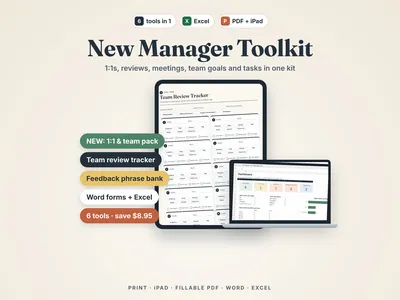
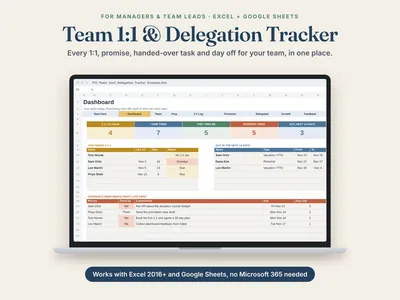
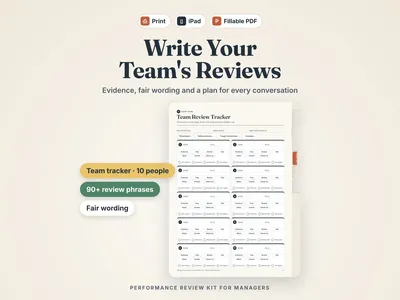
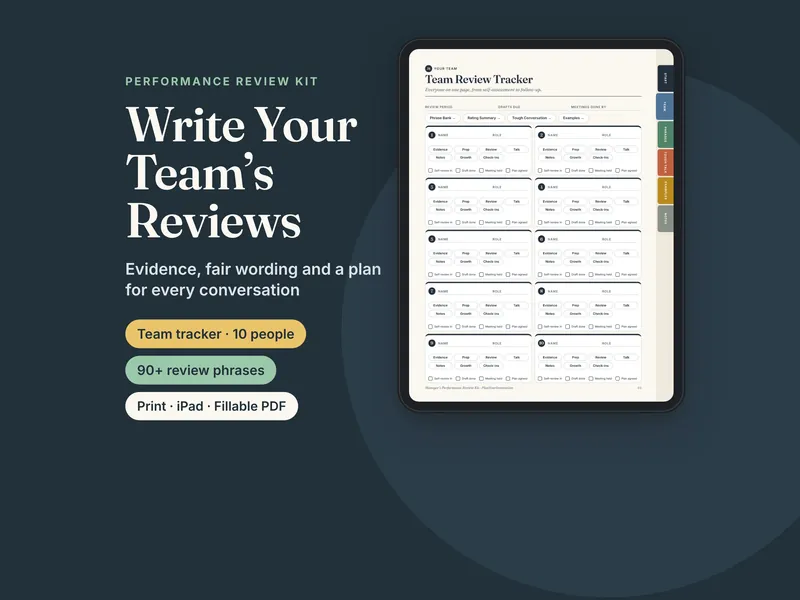
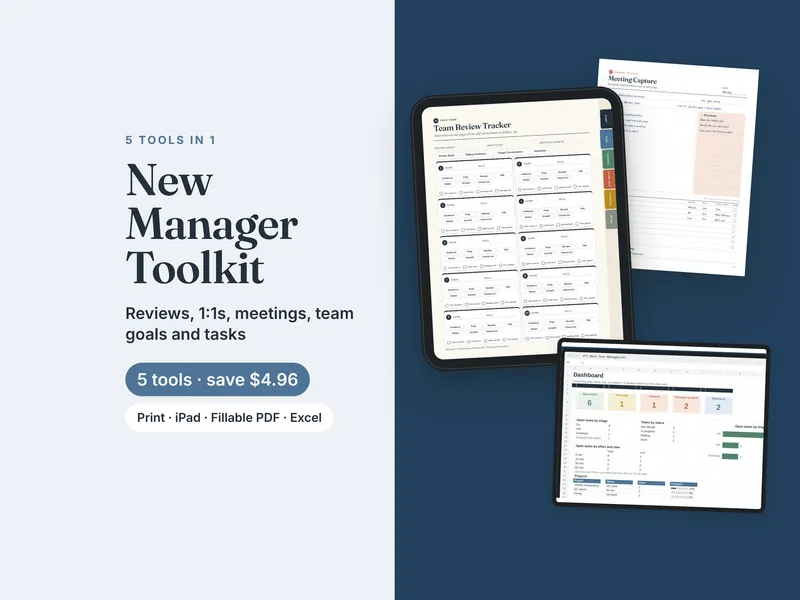
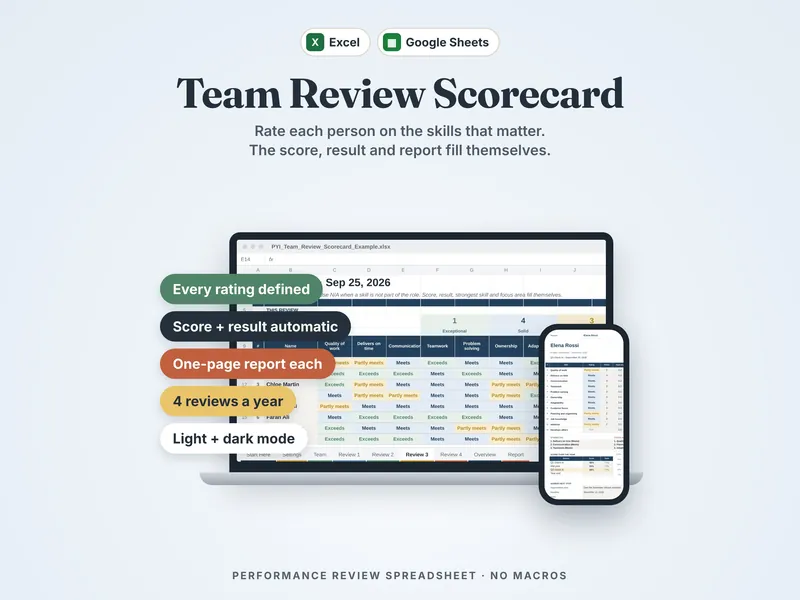
The Manager's Performance Review Kit includes the Performance Improvement Plan, Tough Conversation Planner, Evidence Log, 30-60-90 Day Check-ins and a New-Hire & Probation Review, plus editable Word forms. New to managing people? The New Manager Toolkit includes the full kit plus 1:1 pages, delegation and team tools. Rating a whole team? The Team Review Scorecard spreadsheet tracks an agreed next step with a deadline for each person. See all the options on the performance review examples page, and read our guide on how to write a performance review.
Start free
Put the 90-day plan on one page
Get a free one-page performance review form: results against goals, strengths, areas to grow, a rating with clear levels and a 90-day plan. Fillable, Letter and A4.
Free. Plus a short work-planning tip about once a week. Unsubscribe anytime.
A performance improvement plan is a written plan for an employee whose work isn't meeting the standard. It sets out the gap, measurable goals, the support they'll get and a fixed period, usually 30, 60 or 90 days, with regular check-ins.
What should a performance improvement plan include?
The gap with dated examples, two to four measurable goals with dates, the support the manager will give, check-in dates, the possible outcomes at the review date and signatures.
How long does a PIP last?
Usually 30, 60 or 90 days. Thirty days suits a narrow, quick fix; 60 to 90 days suits skills that take time to build.
Can you pass a performance improvement plan?
Yes. If the goals are clear and the support is real, many people meet them. Ask what counts as met, use the support, keep your own record of progress and bring it to each check-in.
Should HR be involved in a PIP?
Usually yes. Talk to HR before you start one, so the process, length and paperwork follow your company's policy.

 By